6 min read
What is the Best Estimating Software for Plumbing Jobs?
Explore the best plumbing estimating software, key features, AI tools, pricing options, and tips to choose the right solution for your plumbing business.
A plumbing estimate tells a customer what the job will cost and helps a plumbing business decide whether the job will actually make money. Get the numbers wrong, and a plumber can either lose the customer with an inflated quote or lose money by underpricing the work.
That is why many plumbers are moving from spreadsheets, handwritten notes, and basic calculators to plumbing estimating software.
But what is the best option? The honest answer is: there is no single best software for plumbing business. The right choice depends on the type of work you do, how large your team is, and whether you need simple estimates or a complete business system. Let’s take a look in detail.
What is Plumbing Estimating Software?
What Is Plumbing Estimating Software? It is a tool that helps plumbers calculate the expected cost of a job before work begins.
Instead of manually adding every pipe, fitting, fixture, labor hour, and other expense, estimating software can organize these details and turn them into a professional quote.
For example, a bathroom renovation estimate may include:
Fixtures and fittings
Pipes and connectors
Labor hours
Material costs
Equipment or disposal costs
Overhead
Markup and profit
Taxes, where applicable
More advanced systems can also handle plan takeoffs, material databases, assemblies, supplier pricing, and detailed commercial bids.
The important point is that software does not replace plumbing knowledge. It helps organize that knowledge and reduces repetitive calculations.
Features of the Best Plumbing Estimating Software
The best plumbing estimating software should make estimating faster without making it harder to check your numbers. Look for these features:
Easy Material and Labor Pricing: You should be able to enter your actual material costs and labor rates. A software tool is only useful if its numbers reflect what your business really pays.
Custom Estimates: Every plumbing company prices jobs differently. Your software should let you create your own services, labor rates, material prices, markups, and estimate templates.
Professional Quotes: A good estimate should be easy for customers to understand. It should clearly show the scope of work, pricing, exclusions, and payment terms.
Job Costing: Estimating tells you what you expect to spend. Job costing tells you what you actually spent.
Mobile Access: Plumbers rarely sit at a desk all day. Being able to create or review an estimate from a phone or tablet can save a lot of back-and-forth.
Takeoff Capabilities for Larger Jobs: Commercial plumbing contractors may need to measure pipe, count fixtures, fittings, valves, and other components from drawings. In that case, dedicated takeoff and estimating tools can be more appropriate than basic service-business quoting software.
What Are the Main Types of Plumbing Estimating Software?
There are three different categories of plumbing estimating software in the market:
For residential service plumbers, a field-service platform with estimating, scheduling, invoicing, customer management, and payments may be the most practical choice.
For commercial plumbing contractors, detailed estimating and takeoff software can be more important. These tools are designed for large plans, complex material lists, assemblies, and detailed bids.
For small plumbing businesses, an all-in-one or AI-assisted platform can make more sense. You may not need a huge estimating database if you are also handling sales, customer communication, marketing, purchasing, and scheduling yourself.
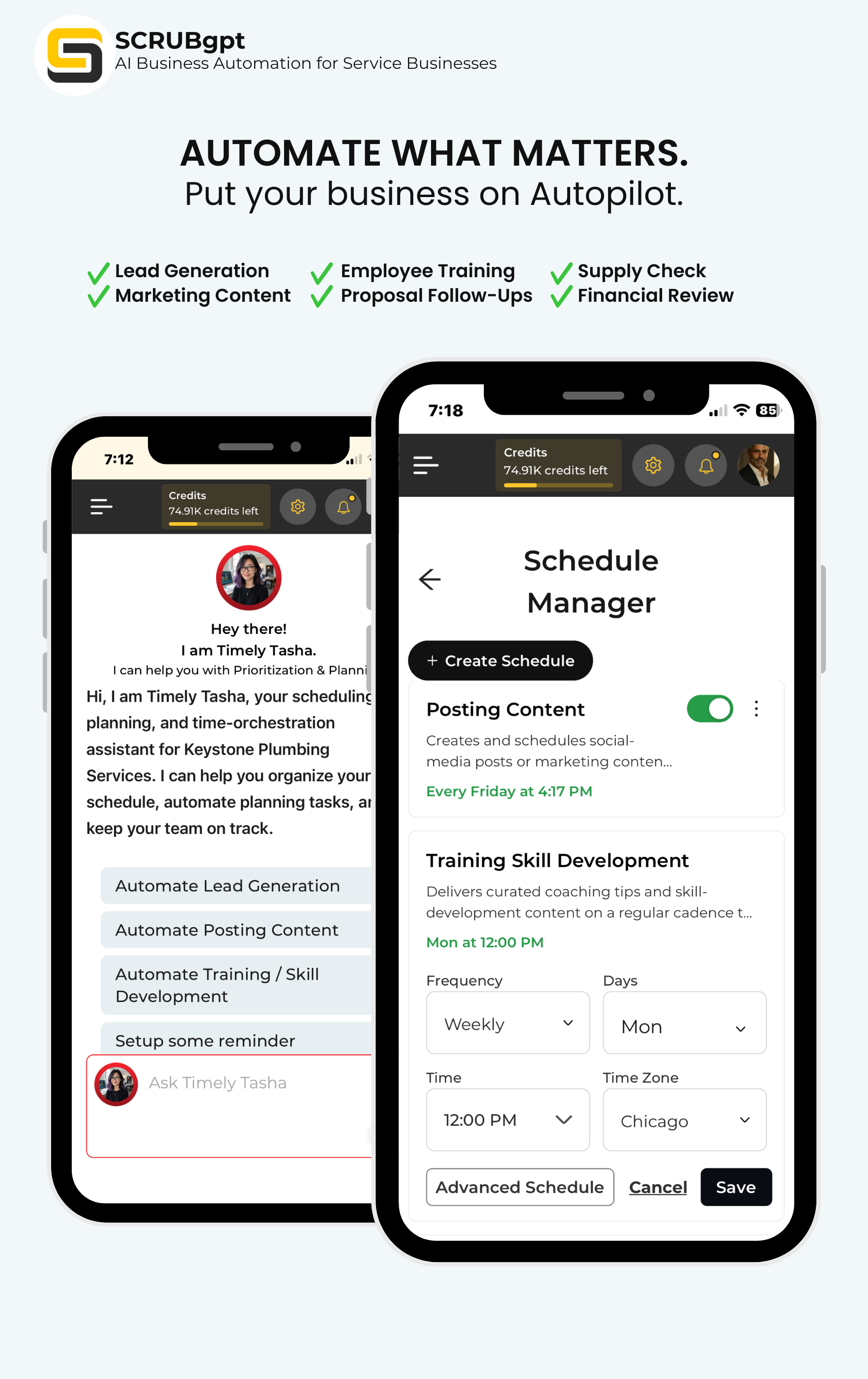
This is where newer tools such as SCRUBgpt take a different approach. Rather than focusing only on estimating, SCRUBgpt is designed around the wider needs of service businesses. Its AI tools can help with estimates, pricing guidance, job photos, supply research, customer communication, scheduling, and other business tasks.
That can be useful for a small plumbing company where the owner is also the estimator, salesperson, dispatcher, and manager.
Is AI Changing Plumbing Estimating?
Yes, but it is important to keep expectations realistic. AI can help organize information, analyze job photos, create draft estimates, suggest pricing considerations, and reduce administrative work. It can be especially helpful for small businesses that do not have a dedicated estimating department.
However, AI should support professional judgment rather than replace it. A photo may not reveal hidden pipe damage, access problems, code requirements, or conditions behind a wall.
For that reason, an AI-generated estimate should be treated as a starting point that a qualified professional reviews before sending it to a customer.
Conclusion
The best plumbing estimating software is not necessarily the one with the most features. It is the one that matches how your plumbing business actually works. A solo plumber may benefit most from simple mobile estimating and business automation. A growing service company may need estimating, scheduling, invoicing, and job costing in one place. A commercial contractor may need advanced takeoff tools and detailed material databases.
Before choosing, focus on accuracy, customization, ease of use, pricing control, and how well the software fits your daily workflow. The goal is simple: spend less time fighting with spreadsheets and more time doing profitable plumbing work.
FAQs
Q1. Which software is most commonly used for estimating?
Common choices range from Excel and PDF-based takeoff tools to specialized estimating platforms such as FastPIPE, McCormick, STACK, PlanSwift, and other trade-focused systems. The most suitable option depends heavily on whether you handle residential service work or commercial plan-based estimating.
Q2. What is the best software for plumbers?
The best software for plumbers depends on the business. A solo plumber may want mobile quoting and customer management, while a commercial contractor may need advanced takeoffs and large material databases. Small businesses that want help beyond estimating can also consider AI-powered platforms such as SCRUBgpt.
Q3. How to estimate plumbing costs?
Start by defining the scope of work. Then calculate materials, labor hours, equipment, permits, disposal, subcontractor costs, and other direct expenses. Add appropriate overhead and profit. Review the final estimate against similar past jobs before sending the quote.
Q4. Is there any free estimating software?
Yes, Excel and other spreadsheet tools can be used to create basic estimates at little or no software cost. Some commercial estimating platforms also offer free trials or limited free versions. However, free tools may lack features such as automated takeoffs, material databases, job costing, integrations, and mobile workflows.
Ready to get started?
Ready to run your service business with AI?
SCRUBgpt helps blue-collar professionals find commercial leads, automate operations, improve marketing visibility, and run their businesses more efficiently.
Try SCRUBgpt free for 7 days and see how AI can support your business.


Featured Posts
1 min read
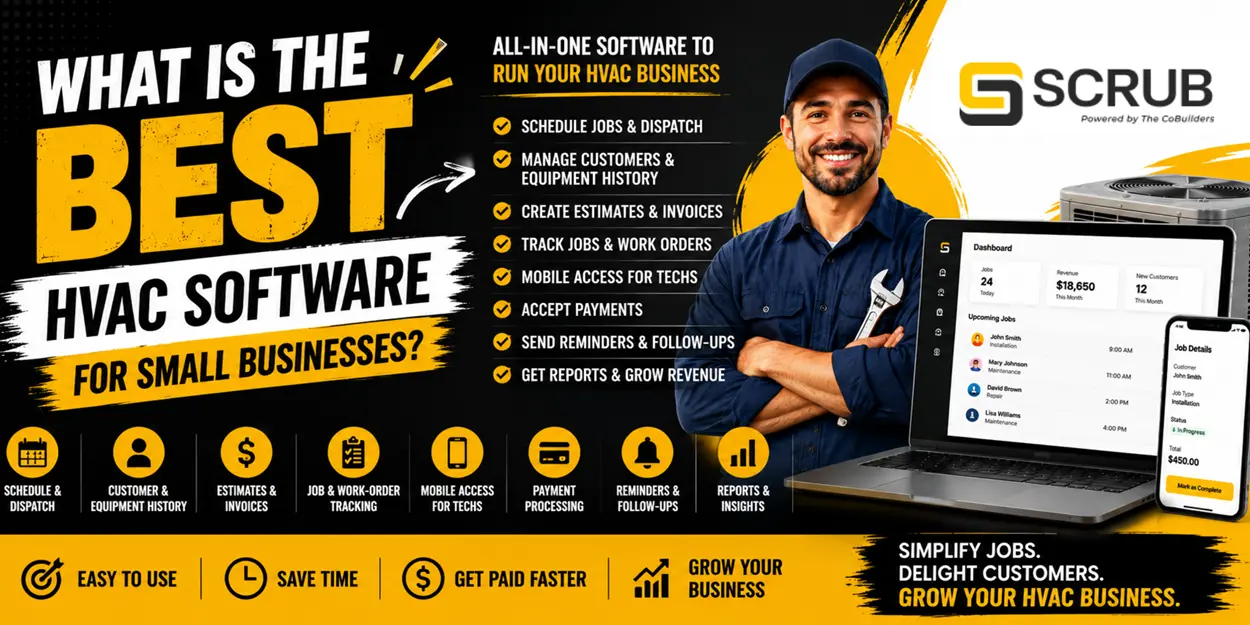
What is the Best HVAC Software for Small Businesses?
1 min read
SCRUBgpt Is Now Available on AWS Marketplace
1 min read
Can Plumbing Business Software Help You Grow Faster?
1 min read
AI Tools for Small Business: 9 Ways to Save Time and Grow
1 min read
Cleaning Company Software: What Growing Cleaning Businesses Should Look for in 2026
Related Blog
1 min read
What is the Best HVAC Software for Small Businesses?
Running a small HVAC business means juggling scheduling, invoicing, and customer records all at once. This guide breaks down what to look for in HVAC software — and how to pick the right fit for your team.
1 min read
SCRUBgpt Is Now Available on AWS Marketplace
SCRUBgpt is now available on AWS Marketplace, expanding access to practical AI tools that help service businesses find work, create estimates, market, automate tasks, and grow.
1 min read
Can Plumbing Business Software Help You Grow Faster?
Discover how the right plumbing business software can help small plumbing companies work smarter and grow faster. Learn how scheduling, customer management, digital invoicing, payment tracking, technician access, reminders, and AI automation can reduce admin work, improve customer service, and help your plumbing business handle more jobs efficiently.
1 min read
Which is the Best Software for Managing a Cleaning Business?
This blog explores the best software for managing a cleaning business in 2026. It covers essential features like scheduling, online booking, customer management, invoicing, staff management, automated reminders, and AI automation. It also explains how to choose the right software for house cleaning companies and small cleaning businesses.
1 min read
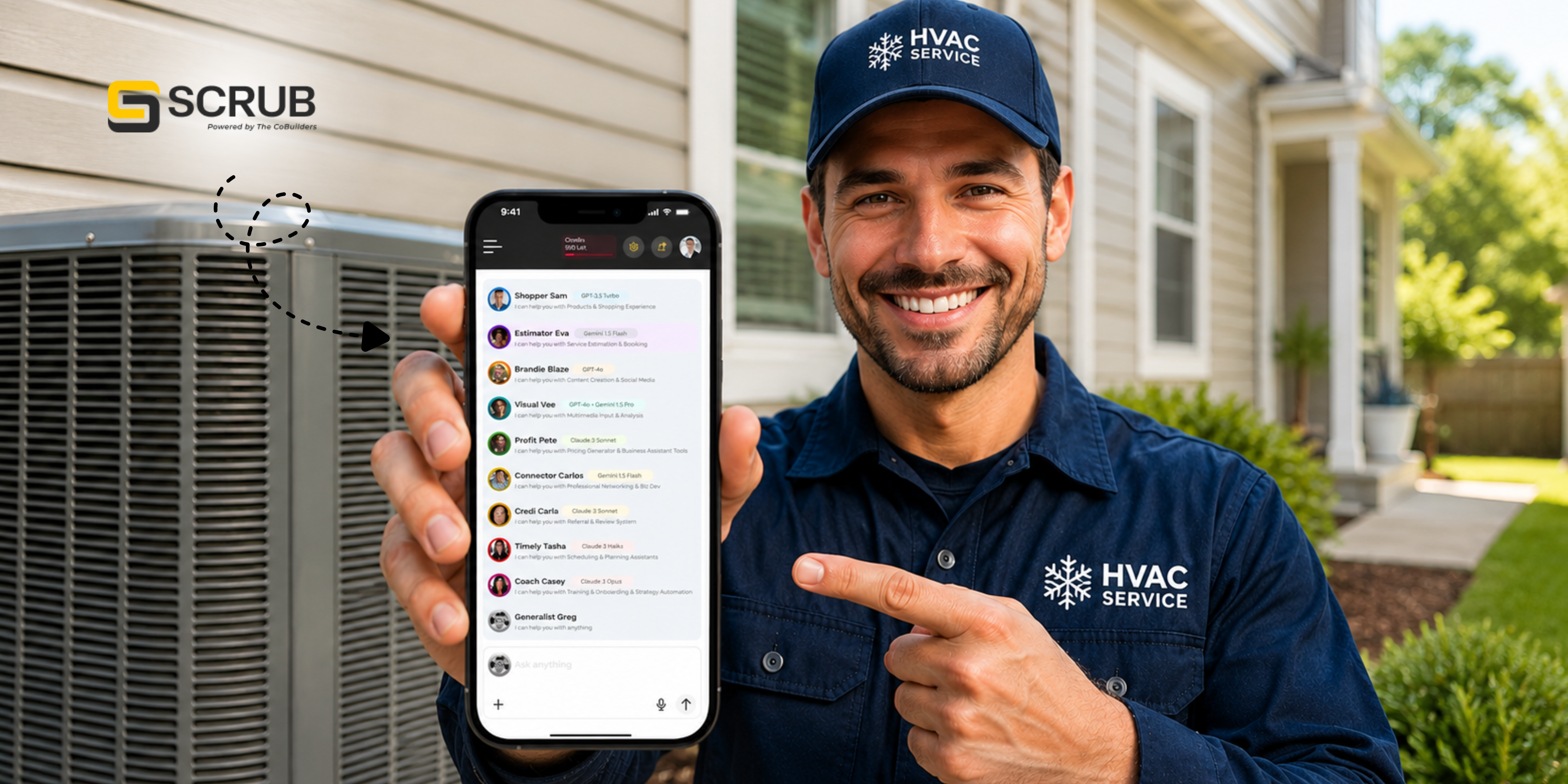
HVAC Service Software: The Smarter Way to Run Your Business
This blog explains what HVAC service software is, how it helps HVAC businesses manage scheduling, estimates, customer records, technicians, and daily operations, and how to choose the right software for your business.
1 min read
AI Tools for Small Business: 9 Ways to Save Time and Grow
Discover the best AI tools for small businesses. Learn how AI helps plumbers, cleaners, contractors, HVAC technicians, and service businesses find customers, create estimates, automate marketing, and grow.
Connect With Us


SCRUBgpt
Legal & Privacy
© 2015-2026 The CoBuilders LLC. SCRUBgpt is a product of The CoBuilders. All rights reserved.