5 min read
Why Small Businesses May Be the Biggest AI Opportunity
Most AI innovation focuses on enterprises, but the biggest opportunity may be small businesses. Learn how plumbers, cleaners, contractors, and service professionals can use AI to improve pricing, marketing, lead generation, and business operations.
Why Small Businesses May Be the Biggest AI Opportunity
A Founder's Perspective
Over the past week, I spent time speaking with small business coaches, mentors, plumbers, cleaners, and service business owners across multiple communities.
The businesses were different.
The industries were different.
But the questions were remarkably similar.
And they reinforced something I've believed for a long time:
The biggest opportunity in AI may not be inside large enterprises.
It may be inside small businesses.
AI Is an Enabler, Not a Magic Wand
One observation came up repeatedly.
Most people agree that AI can make work easier.
Most people agree that AI can help businesses become more efficient.
Most people agree that AI can improve profitability.
But nobody believes AI will do the work for them.
In fact, many operators expect the opposite.
As AI creates more opportunities, business owners will still need to execute.
Leads still need follow-up.
Estimates still need approval.
Customers still need service.
Relationships still need to be built.
The businesses that benefit most from AI won't simply have access to it.
They'll be the businesses that know how to convert AI-generated opportunities into real-world outcomes.
AI is not a magic wand.
It's an enabler.
Small Businesses Still Haven't Received the Full Value of AI
For all the attention AI receives, many small businesses still haven't experienced meaningful value from it.
Most AI innovation today is concentrated in:
Large enterprises with dedicated technology teams
Technical users comfortable experimenting with models
Software companies packaging AI into existing products
Meanwhile, many service businesses remain on the outside looking in.
Plumbers.
Cleaners.
Electricians.
HVAC technicians.
Landscapers.
Contractors.
Many know AI is important.
Few know how to apply it to their daily operations.
Even fewer have access to tools designed specifically for the way they work.
The models are powerful.
The accessibility gap remains significant.
What Plumbers Are Actually Asking
After spending time in plumbing communities, I noticed that very few conversations were about AI.
Most conversations were about running the business.
Questions included:
How should I price this remodeling project?
Is my estimate too high or too low?
Where do I find more customers?
How do I market my services?
Which app should I use for scheduling and invoicing?
What is the best way to generate leads?
How do I handle slow-paying customers?
Which supplies or tools should I buy?
In many cases, someone would upload a photo of a plumbing issue and ask for guidance.
Not because they lacked technical expertise.
Because they wanted help making better business decisions.
What Cleaning Companies Are Actually Asking
The same pattern appeared in cleaning communities.
Questions included:
What is the best vacuum to buy?
How should I price a deep cleaning?
Is Yelp or Angi worth the investment?
Where do you find quality leads?
What type of content actually generates customers?
How do I improve margins?
What would you do differently if you started over?
One cleaner shared that they had exhausted their marketing budget on lead generation platforms and still struggled to produce enough business to justify the investment.
Another wanted advice on pricing recurring services.
Another wanted help turning social media views into paying customers.
Again, these were not intelligence problems.
They were business problems.
These Are Not Intelligence Problems
What's interesting is that most of these challenges are not caused by a lack of expertise.
The plumber understands plumbing.
The cleaner understands cleaning.
The contractor understands construction.
The challenge is access to business intelligence.
Access to:
pricing guidance
lead opportunities
operational support
marketing recommendations
supplier information
decision support
Large enterprises often have teams dedicated to these functions.
Small businesses usually do not.
That's where AI has the opportunity to create meaningful value.
The Missing Layer
For years, software has focused on helping businesses complete tasks.
The next opportunity may be helping businesses make better decisions.
Not replacing expertise.
Amplifying it.
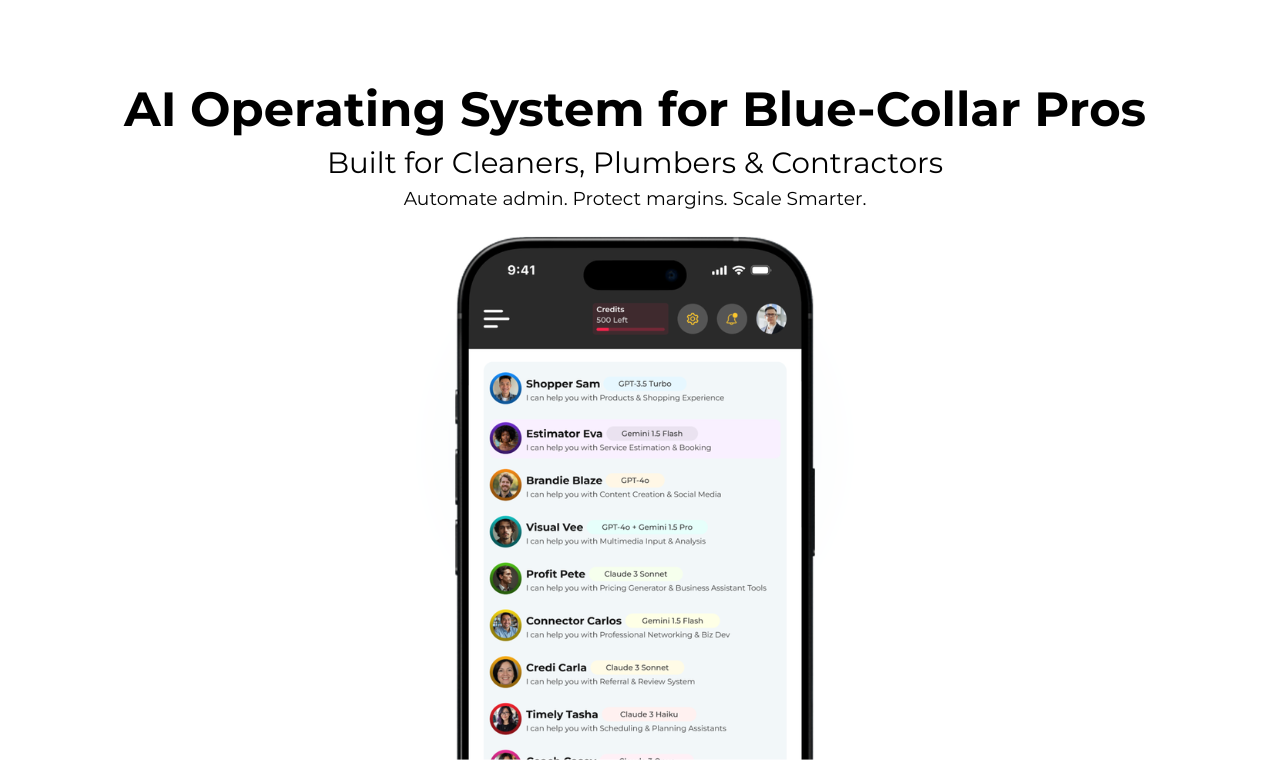
Imagine a plumber taking a photo of a remodeling opportunity and immediately receiving:
project insights
pricing guidance
estimate recommendations
lead opportunities
marketing content
supply suggestions
Imagine a cleaning company identifying ways to improve margins, generate more leads, and create marketing content without spending hours researching.
This is where AI becomes practical.
Not because it replaces work.
Because it helps operators move faster and make better decisions.
Why This Matters
Small businesses power enormous portions of the economy.
Yet many continue to operate with limited access to the tools, intelligence, and support systems available to larger organizations.
That gap creates opportunity.
As AI becomes more accessible, service businesses can begin operating with greater structure, consistency, and confidence.
The future of AI for plumbers may not be writing code.
It may be helping generate estimates.
The future of AI for cleaners may not be building models.
It may be helping improve margins.
The future of AI for contractors may not be prompt engineering.
It may be helping find and win more work.
Looking Ahead
One thing became clear from these conversations.
Business owners are not asking for more technology.
They're asking for better outcomes.
More customers.
Better margins.
Faster decisions.
Less administrative burden.
More confidence.
The future of AI for small businesses won't be defined by benchmarks or model comparisons.
It will be defined by whether operators can use it to solve real business problems.
That's the opportunity we're focused on with SCRUBgpt.
And I believe we're still in the very early stages of what AI can do for service businesses.
The biggest AI opportunity may not be helping large enterprises become slightly more efficient.
It may be helping millions of plumbers, cleaners, contractors, electricians, HVAC technicians, and other service businesses operate smarter than ever before.
Ready to get started?
Ready to run your service business with AI?
SCRUBgpt helps blue-collar professionals find commercial leads, automate operations, improve marketing visibility, and run their businesses more efficiently.
Try SCRUBgpt free for 7 days and see how AI can support your business.


Featured Posts
1 min read
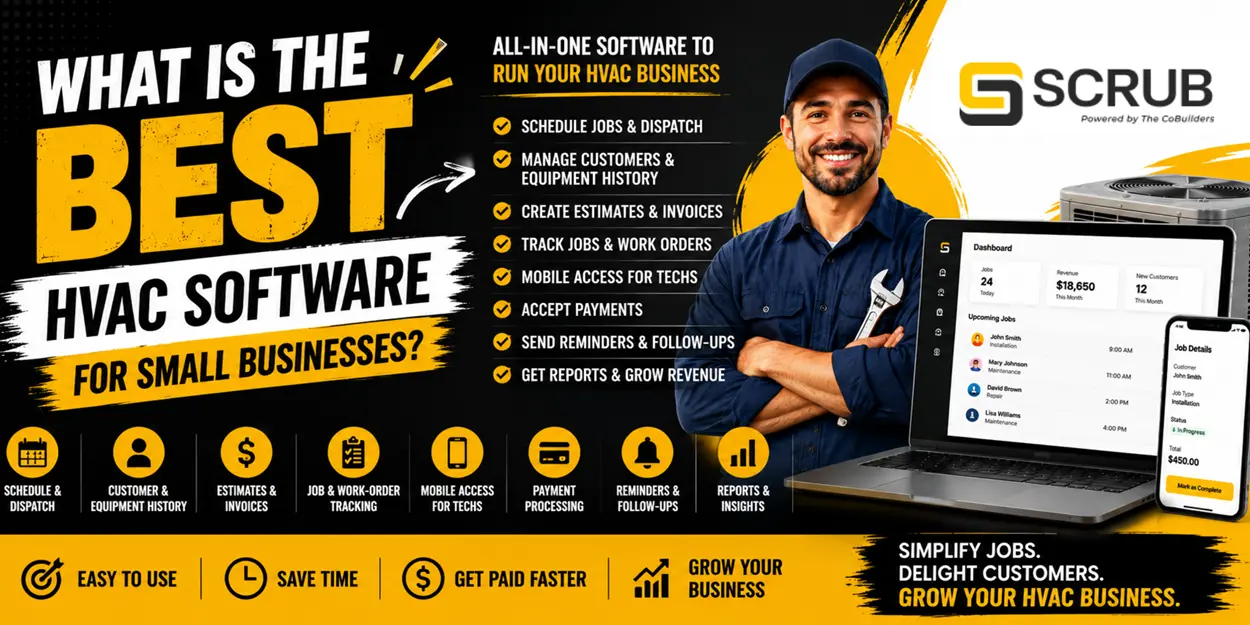
What is the Best HVAC Software for Small Businesses?
1 min read
What is the Best Estimating Software for Plumbing Jobs?
1 min read
SCRUBgpt Is Now Available on AWS Marketplace

1 min read
Can Plumbing Business Software Help You Grow Faster?
1 min read
AI Tools for Small Business: 9 Ways to Save Time and Grow
1 min read
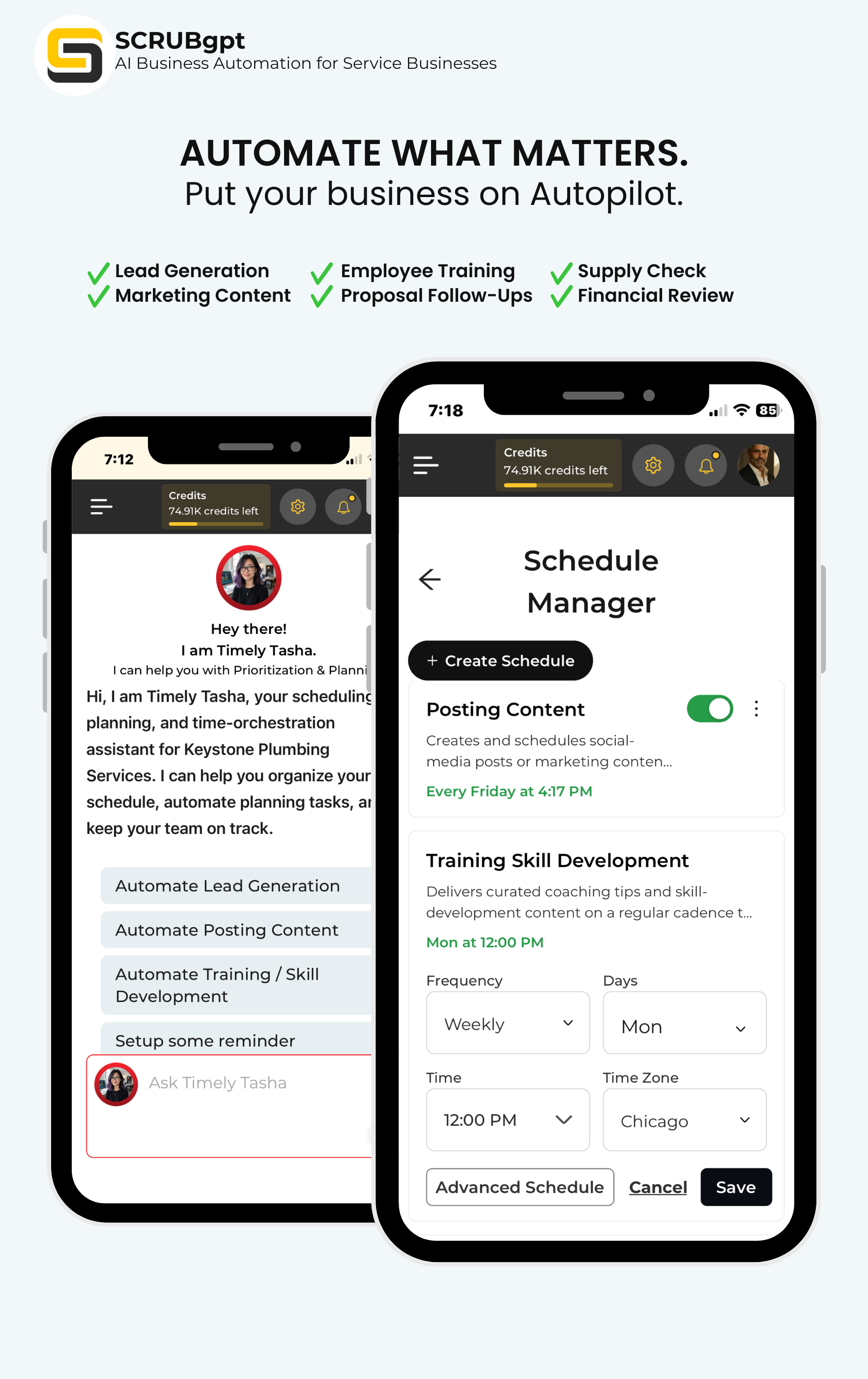
Cleaning Company Software: What Growing Cleaning Businesses Should Look for in 2026
Related Blog
1 min read
What is the Best HVAC Software for Small Businesses?
Running a small HVAC business means juggling scheduling, invoicing, and customer records all at once. This guide breaks down what to look for in HVAC software — and how to pick the right fit for your team.
1 min read
What is the Best Estimating Software for Plumbing Jobs?
Explore the best plumbing estimating software, key features, AI tools, pricing options, and tips to choose the right solution for your plumbing business.
1 min read
SCRUBgpt Is Now Available on AWS Marketplace
SCRUBgpt is now available on AWS Marketplace, expanding access to practical AI tools that help service businesses find work, create estimates, market, automate tasks, and grow.
1 min read
Can Plumbing Business Software Help You Grow Faster?
Discover how the right plumbing business software can help small plumbing companies work smarter and grow faster. Learn how scheduling, customer management, digital invoicing, payment tracking, technician access, reminders, and AI automation can reduce admin work, improve customer service, and help your plumbing business handle more jobs efficiently.
1 min read
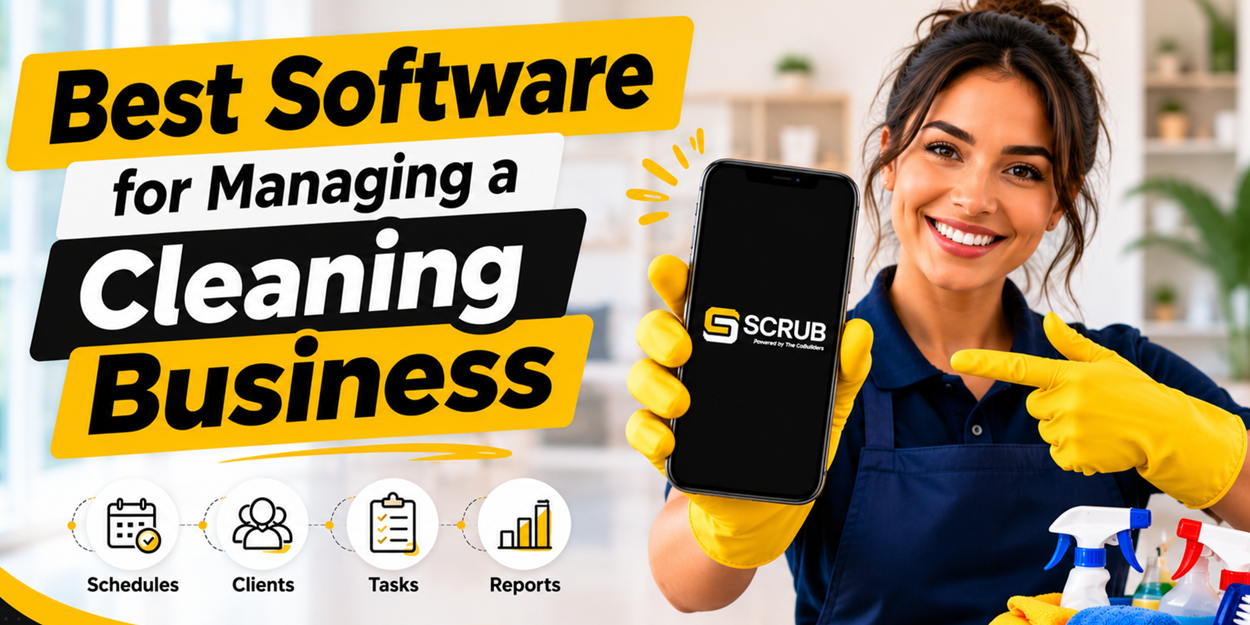
Which is the Best Software for Managing a Cleaning Business?
This blog explores the best software for managing a cleaning business in 2026. It covers essential features like scheduling, online booking, customer management, invoicing, staff management, automated reminders, and AI automation. It also explains how to choose the right software for house cleaning companies and small cleaning businesses.
1 min read
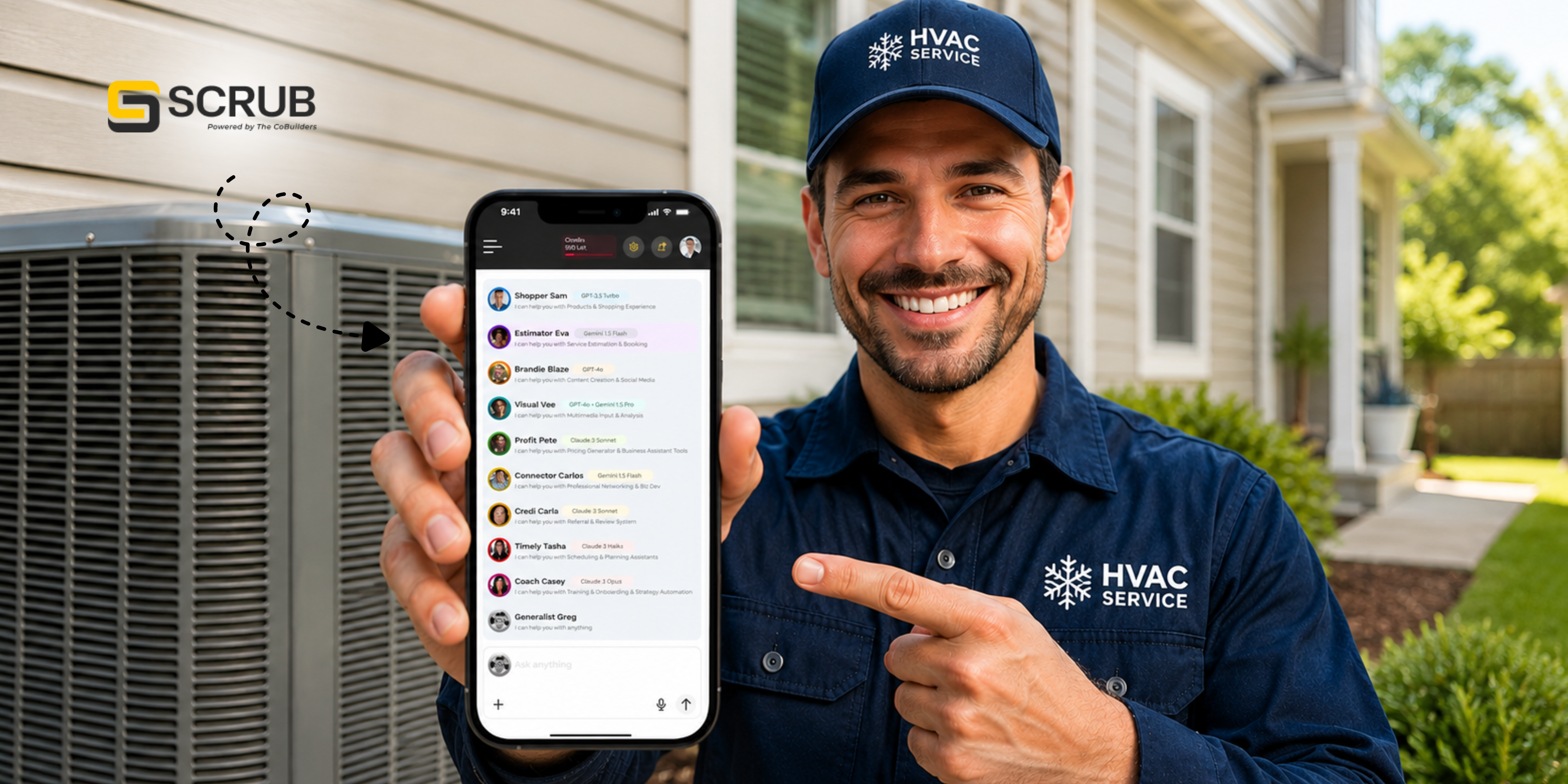
HVAC Service Software: The Smarter Way to Run Your Business
This blog explains what HVAC service software is, how it helps HVAC businesses manage scheduling, estimates, customer records, technicians, and daily operations, and how to choose the right software for your business.

Connect With Us


SCRUBgpt
Legal & Privacy
© 2015-2026 The CoBuilders LLC. SCRUBgpt is a product of The CoBuilders. All rights reserved.